
Guest reading progress stays in this browser and is not synchronized to your account automatically. Use the learning panel to include browser marks and save them explicitly. Clearing site data removes browser marks.
Your learning notebook
Save courses and review situations deliberately. Load your account records on another device when you want to continue.
Bookmarks and review choices stay in this browser until you load and save an account. Answers and time spent reading are not recorded.
Saved courses
Saved situations to revisit
Find your marked situations by title or topic, then open the original question and explanation.
Your review choices will appear here when this learning view is ready. Use the account controls above to load account choices.
No situations are marked for review in this learning view.
No saved situation matches these filters. Clear the search or choose all topics.
Identification practice
Land access practice
Field decisions practice
Harvest care practice
A Duck view-transition ledger: do the water and flight notes describe the same bird? ↓
A Duck view-transition ledger: do the water and flight notes describe the same bird?
Rehearse together: a water-view image of Bird A, a departure note, a later flock image and a labelled reference. Keep four fictional sources separate. Mallard, Northern Pintail and American Wigeon are examples, not every possible species. None of these records establishes a species.
Original exercise. D1–D4 and birds A/B are invented labels, not sightings, locations or hunting permission. Observe passively from a lawful position. No approach, shooting, distance or time threshold is set; an actual bird’s sex, age or licence eligibility is not classified.
Four links across a change of view
A missing connection stays missing; a species name cannot repair it.
- Locate one individual
Agree which bird is A before describing it.
- Name the view
Separate water view, departure and later flock image.
- Check continuity
Was the same individual actually followed?
- Keep separate decisions
Separate species evidence, documents, season and access.
The ledger scrolls independently. Focus its region and use arrow keys to compare four columns.
| What the source contains | Limits of that source | What remains unresolved | Next passive observation or review |
|---|---|---|---|
| D1 · Bird A beside a reed gap. | One water posture and angle; some regions hidden. | Unseen regions, species, age or sex. | Have a partner locate A and describe this view. |
| D2 · “A bird lifted from the group”. | The note does not establish continuous tracking of A. | Whether the departing bird was A. | Keep departure separate from A’s line. |
| D3 · Bird B in a later mixed-flock image. | Another working label; the whole flock is not identified. | B’s species and connection to D1. | Start B’s line; retain the wider image. |
| D4 · A reference caption names species, age and plumage. | A reference bird, not A or B. | Whether the actual views support comparison. | Keep the caption; compare without inventing detail. |
Bird A and Bird B remain unresolved. An orderly sequence is not proof of continuous observation. Keep D1 and the uncertain departure apart; do not make a composite animal from different birds’ clearest parts.
Rehearse the review with your existing reference photographs
- Use each lesson reference separately, keeping its source and age or plumage caption. Cover the species name, describe the view, then uncover it to review your reasoning. A reference answer does not identify D1.
- Give a partner D1 and your position description without a species guess. If they find another bird, repair the description first. Mark hidden regions unseen; do not fill them from memory or D4.
- Read D2 and ask whether it connects to A. If tracking was lost, keep a separate line. Name an observation question and an official-rule question; a completed worksheet does not approve an outing.
Change one condition in the exercise
The water view disappears, then a bird is seen in flight. Can the notes be joined?
Only if the record supports the same individual. Here continuity was lost; a clearer later flight view does not supply the missing connection. Keep departure separate and A unresolved.
Review the original sequence with a mentor: what was followed, and where did tracking stop? Let new views arise naturally from your lawful position; do not pursue a bird to complete the worksheet.
One obvious-looking bird receives a name. Does it identify the whole flock?
No. A name proposed for B does not identify A or its neighbours. Each individual needs visible evidence. A shared feeding place or direction cannot fill a hidden view.
Point to the same individual before comparing notes. Keep different birds on separate lines and record uncertainty. More confident voices create neither another view nor an independent observation.
The reference is labelled, but light, season or the actual category is uncertain. What remains?
Keep the age and plumage caption attached. Do not apply a reference category to an actual bird in a different or incomplete view. Describe light and hidden information without treating apparent colour as measurement.
A supported species would still leave separate questions about dates, place, documents and conditions. Check official sources. If species, age or sex is unsupported, retain uncertainty rather than choosing a convenient licence category.
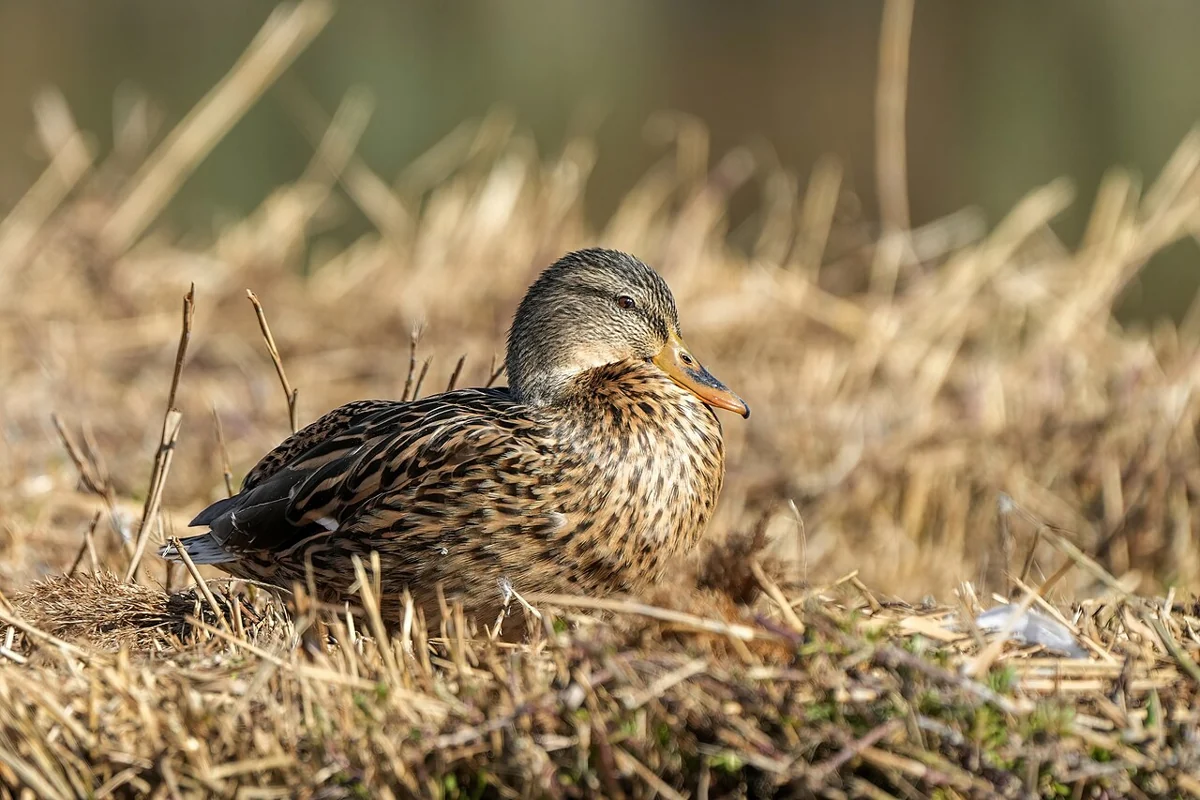
Real reference photograph. Compare several visible features with the full lesson; one photograph does not cover every age, sex, plumage or viewing angle. Resized and WebP encoded without cropping.
Image credit: Giles Laurent · CC BY-SA 4.0 · View image source · CC BY-SA 4.0What you will learn
- Compare Mallard, Northern Pintail and American Wigeon using shape and more than one feature.
- Include female and nonbreeding views in practice.
- Keep a mixed flock, a species name and current requirements separate.
An original SKHunter learning guide
Compare the photographs
Before opening the notes, describe the features you can actually see. Compare the views without treating their displayed sizes as a common scale.
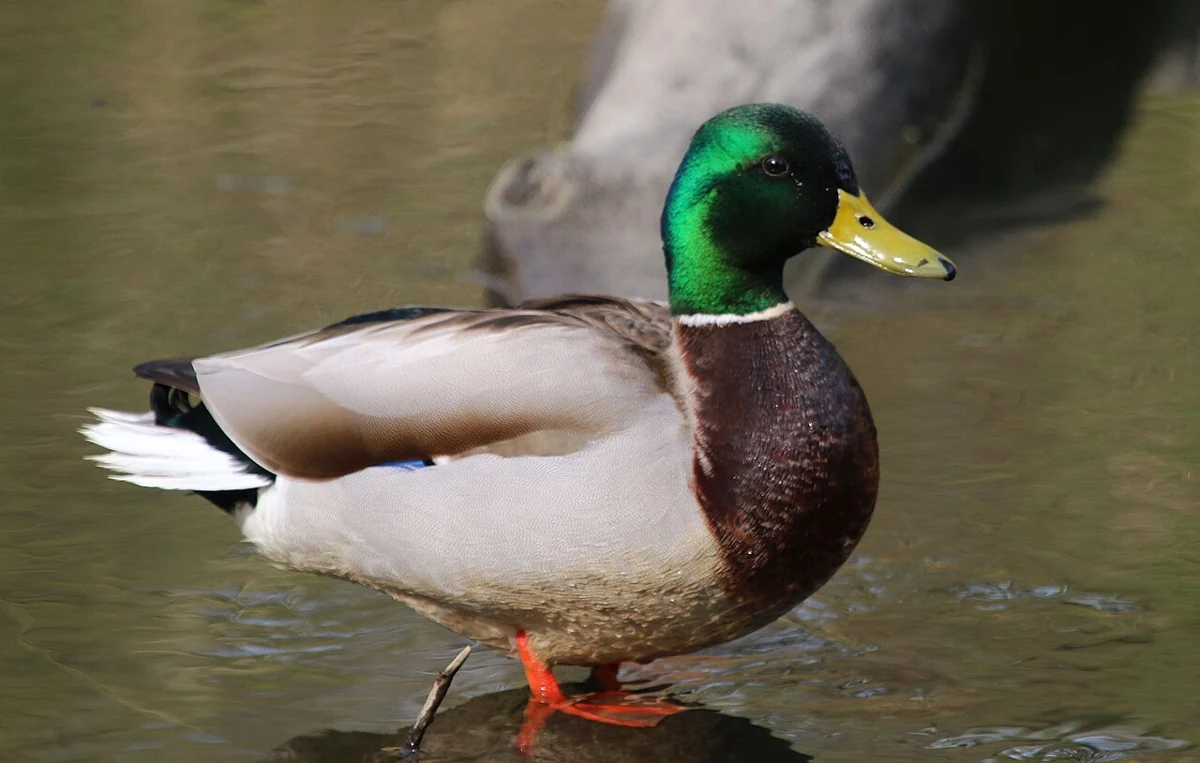
Mallard · male
A male photographed at the water’s edge.
Reveal observation notes
What this view lets you examine
- Locate the green head, yellow bill and pale neck ring.
- Compare its broad body outline with the two other Ducks below.
Limits of this view
This is a colourful male view, not a template for females or nonbreeding males. Another bird is partly visible behind it.
Mallard · female
A resting female with the bill and mottled body visible.
Reveal observation notes
What this view lets you examine
- Locate the orange-and-dark bill before naming the bird.
- Describe the mottled body independently of the male reference.
Limits of this view
The resting posture hides the legs and changes the apparent outline. This image does not represent every female duck.
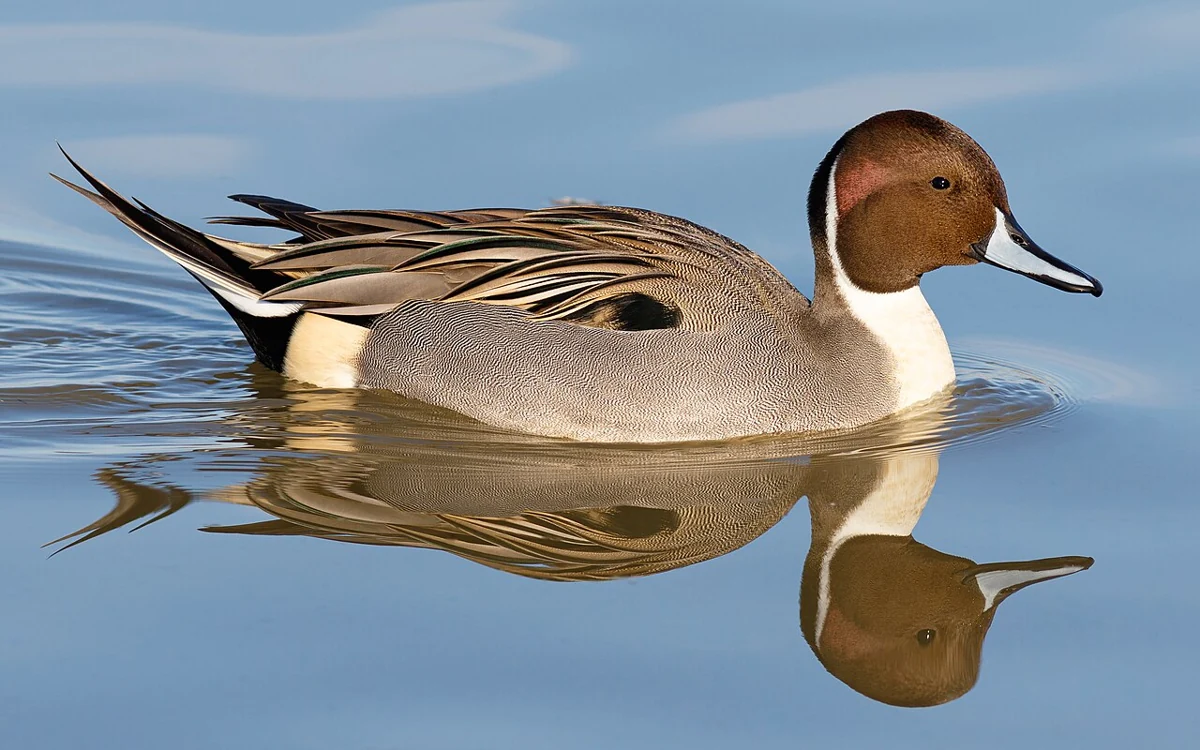
Northern Pintail · male
A clear side view with the neck and pointed tail visible.
Reveal observation notes
What this view lets you examine
- Follow the slender outline from neck to tail.
- Locate the white line rising along the brown head and neck.
Limits of this view
The long tail and bright pattern are shown on this male. Female and nonbreeding views need separate practice.
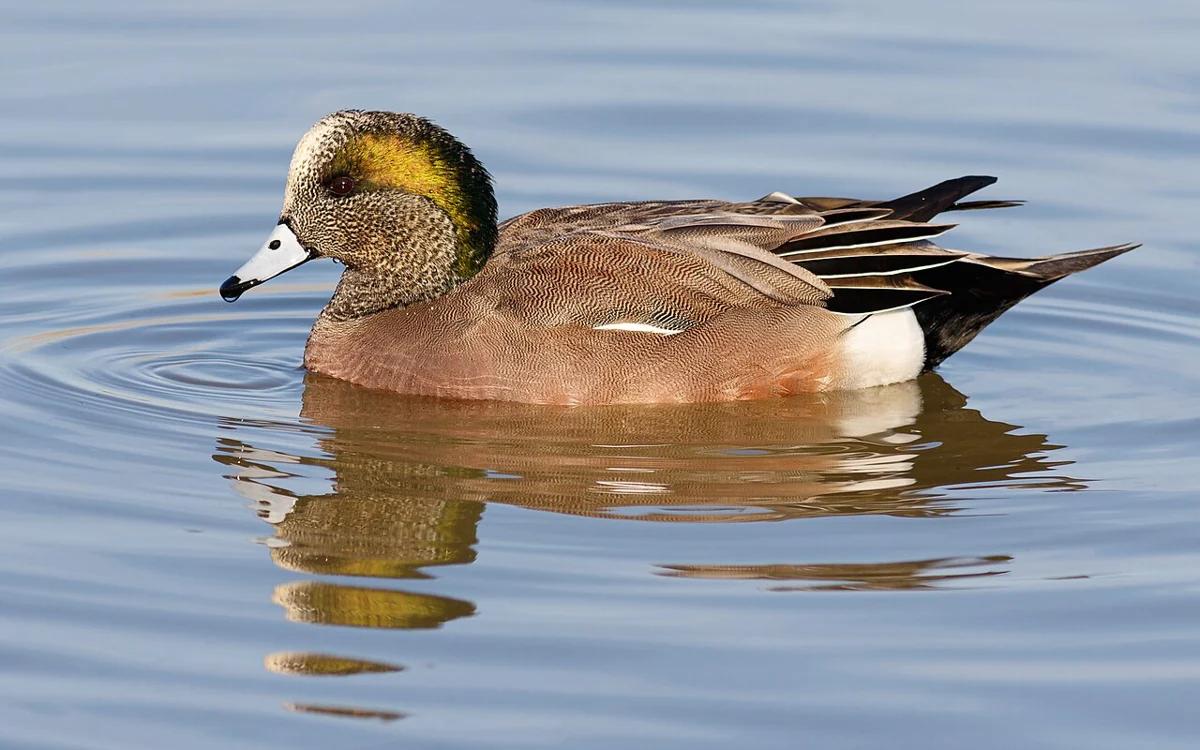
American Wigeon · male
A male showing a short pale bill and the side of the head.
Reveal observation notes
What this view lets you examine
- Compare the bill’s length and outline with the Mallard.
- Follow the pale crown and the darker stripe behind the eye.
Limits of this view
The head stripe’s apparent colour depends on light and angle. This male photograph does not teach all female or nonbreeding views.
Set up a three-species practice station
Collect one labelled male and one labelled female reference view for Mallard, Northern Pintail and American Wigeon. Keep source captions so age and plumage do not disappear. Arrange blank rows for silhouette, bill, head/neck, wing when visible and uncertainty. Work through one image at a time before placing the images side by side.
Describe each photograph without saying the name. Then compare your notes with the reference, circle a useful feature and cross out anything you assumed. The aim is a reliable observation habit. These three species are a starting set, not a complete list of Ducks you may encounter in Saskatchewan.
Learn one compact comparison, then test it
Start with proportions: Mallard is relatively bulky, Northern Pintail is more slender with a longer-looking neck and tail, and American Wigeon has a compact impression and short pale bill. Use these as comparison questions. Posture, swimming and viewing angle can alter an outline, so one silhouette should lead to another check.
Make three columns on your practice page. Add a second independently visible feature before assigning an answer. If the neck is tucked or the bill hidden, write that limitation. Repeat using photographs taken from different angles; success with three ideal side views does not establish that an overhead flock will be identifiable.
Do not study only colourful males
A breeding male Mallard’s green head is familiar, while a female is mottled brown and a nonbreeding male may be much browner. Female Northern Pintail remains slender and often shows a plain tan face. Female American Wigeon combines a gray-brown head with a short, pale, dark-tipped bill. These are combinations to compare, not single-mark passwords.
Create a second round using only female or nonbreeding reference images. Cover the names and point to the bill, outline and visible head pattern before answering. Label an unseen wing as unseen. If you can identify only the brightly coloured male photograph, your next lesson is already clear: practise the views missing from your knowledge.
Separate individual birds within a mixed flock
Choose one individual and keep it in view long enough to describe it. Do not name every bird from the first obvious male or from the place where the flock is feeding. In a notebook, use temporary labels A, B and C tied to landmarks, then describe each bird separately. These labels help avoid combining one bird’s head with another bird’s wing.
Try a paired exercise with a friend: one describes bird A without naming it; the other finds the same bird in the photograph. If they choose a different bird, improve the location description first. Listen to calls as supporting context only when you can associate the sound with the bird; do not assign an unseen caller to every visible individual.
Turn recognition into a conservative field decision
Observe with binoculars, never a firearm sight. At home, practise a short view followed by an answer that includes evidence and uncertainty; keep “unresolved” as a valid outcome. Do not shorten an actual field observation to fit a practice timer. Low light or missing features may mean no usable identification that day.
After identifying a species, consult the current Saskatchewan federal summary and provincial material for your trip. Do not import another province’s or a U.S. website’s dates, limits or equipment rules. Save a practice note with the view, the two supporting features and the next reference to review. Revisit any answer that relied only on colour or speed.
Practice case: a brown duck beside a green-headed male
One Mallard is easy to recognise, but a second brown bird keeps its bill behind vegetation. The flock is mixed.
Put it into practice
- Keep the brown bird as a separate observation instead of borrowing the male’s name.
- Record visible proportions and head pattern, with bill and wing marked unseen.
- Wait for a useful view without disturbing the flock.
- Leave the brown bird unresolved if enough features remain hidden, then practise comparable female views at home.
Common mistakes to avoid
Learning only drakes in breeding plumage
Build female and nonbreeding examples into every practice set.
Calling the whole flock one species
Follow individual birds and avoid combining features across them.
Importing a regulation with an identification picture
Biological references help with names; use current Saskatchewan sources for the intended hunt.
A green-headed Mallard is clear, but the neighbouring brown duck’s bill is hidden. What should you record?
- Two confirmed Mallards.
- One identified Mallard and one separate duck observation that may remain uncertain.
- A Northern Pintail because all brown birds beside Mallards are Pintails.
Show the answer and explanation
Answer: B. One identified Mallard and one separate duck observation that may remain uncertain.
The visible male identifies itself, not its neighbour. Keep each individual’s evidence and uncertainty separate.
Current checks and official context
How to use the references
The biological references explain visible features and variation. Their photographs and captions can support further practice; U.S. pages do not supply Saskatchewan hunting rules.
Before turning recognition into a hunting plan
Use the current official Saskatchewan material for the actual species, person, place, date and activity. The lesson provides no independent determination of eligibility or an open season.
Turn this lesson into your next outing
Review the date, species, starting template and linked day plan in an editable preparation draft. You choose what to add and save.
Prepare your own trip
Review a preparation draftContinue learning
Snow Goose or Ross’s Goose: practise an evidence-based identificationTry a practical situation
Can a reference photo fill the gaps?Opening a draft does not create a saved checklist. A checked item records your own review, not permission or an open season.
Scenario practice
Put your field decisions into practice.
Try 24 situations across identification, access, field adjustments and harvest care. Compare your choice with the explanation, then revisit the relevant lesson.
Original sources
- Cornell Lab of Ornithology · Mallard identification
- Cornell Lab of Ornithology · Northern Pintail identification
- Cornell Lab of Ornithology · American Wigeon identification
- Missouri Department of Conservation · Waterfowl identification (biology reference)
- ECCC · Current Saskatchewan migratory-bird summary
Use this as a planning guide. Check current official requirements and site conditions before travelling.
Help improve this guide
Tell the editor about something on this public page that needs attention.