
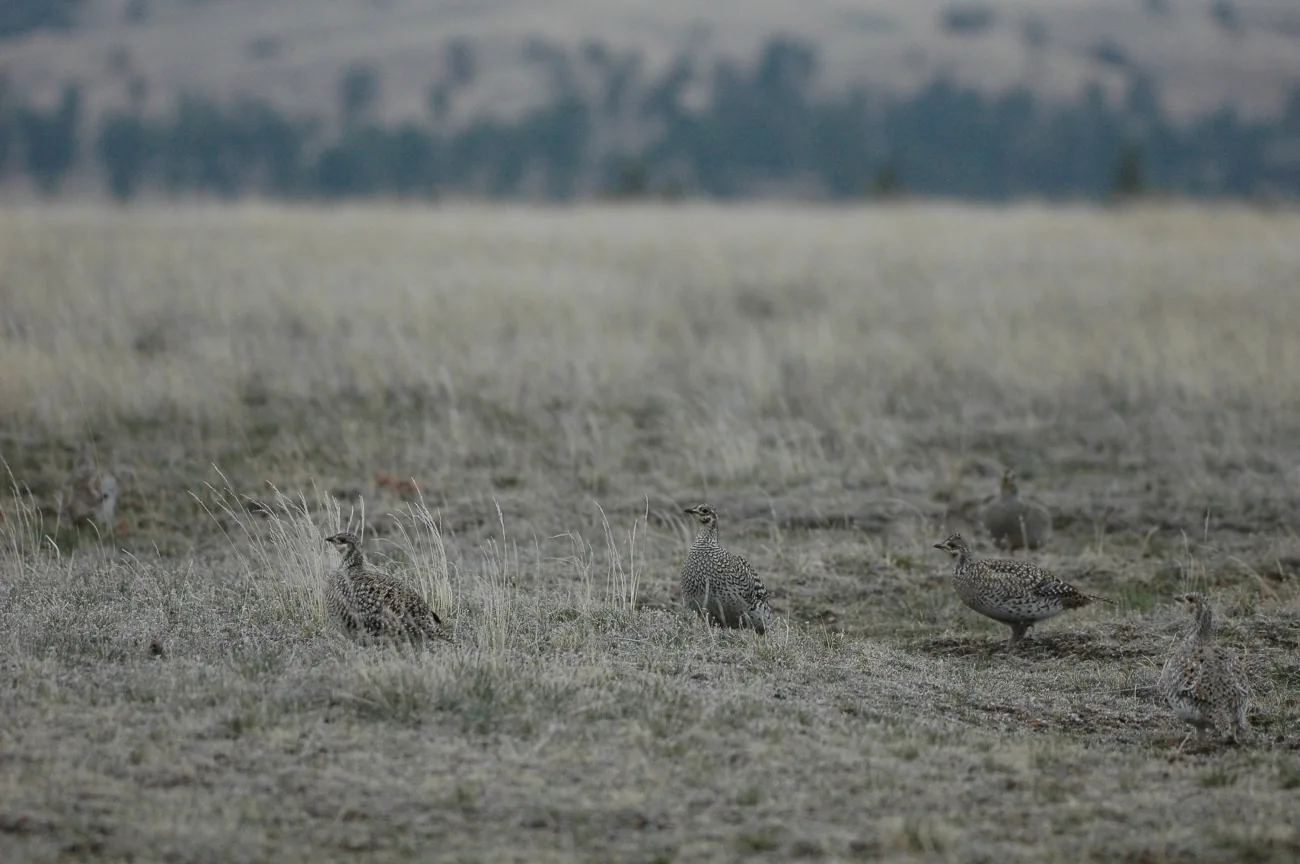
Representative photograph from the credited source, taken outside Saskatchewan. It is not a current sighting, a distribution map or a complete identification guide. This is one example from a wider bird group; other species, ages and plumages can look different.
Image credit: Brett Billings/USFWS · Public Domain · View image sourceWhat you will learn
- Break Upland game birds into individual species to study.
- Use shape and plumage together instead of a flush impression.
- Turn a short encounter into a useful, cautious field note.
An original SKHunter learning guide
Build a record, not a prediction
Teaching diagram · not a map- 01Observe
Look from a lawful position without moving closer to obtain an answer.
- 02Describe
Record visible features, time, light, distance and behaviour.
- 03Keep uncertainty
Separate what you saw from what you think it might mean.
One clue starts a question. Several consistent observations build a better record; uncertainty remains a valid outcome.
Make a comparison sheet before going out
Upland game birds is a learning category, not one species. Start a simple sheet for Sharp-tailed Grouse, Ruffed Grouse, Gray Partridge and Ring-necked Pheasant using an authoritative reference for each. Compare the tail, overall proportions and visible plumage. Sharp-tailed Grouse have pointed central tail feathers; Ruffed Grouse have a fan-shaped tail. Gray Partridge are compact birds with a short tail, while Ring-necked Pheasant have a long pointed tail. A hidden tail remains a missing clue rather than an invitation to infer one.
Let habitat help frame the question
A woodland edge, shrubby open ground and a cultivated field offer different contexts, but habitat alone does not identify a bird. A bird can be moving between areas, and the conditions on a visit may differ from an old image. Record the vegetation and the part of the bird you actually saw. Where permission covers only one parcel, make the boundary part of the plan before starting the visit. A bird moving across it changes the observation location, not the permission you were given.
Practise describing a brief encounter
A sudden departing bird may leave only an impression of colour or sound. Write “unidentified upland bird” if that is what the evidence supports, then list any reliable tail, body or plumage detail. Do not invent a sex or age class from a fleeting silhouette. Back at home, compare the note against several reference photographs, including less colourful birds. If the required features never became visible, leave the record unresolved. For hunting, read the exact named species entry and its current conditions; a group label or tutorial illustration cannot replace identification.
Worked example: a bird disappears into cover
A bird leaves a grassy edge and vanishes before you obtain a clear view. You noticed a brown body but not the tail.
Put it into practice
- Record unidentified upland bird and the features actually seen.
- Note the vegetation, time and approximate position without assigning a habitat-based species.
- Compare multiple species photographs later; keep the identification unresolved if the evidence remains insufficient.
- Use the encounter to choose what to study next, rather than treating it as confirmed hunting opportunity.
Turn a sighting into a useful note
A 36-second photographic motion explainer with gentle camera movement, four clear chapters and large on-screen words. Silent; optional captions and a transcript are available.
Choose a section or use the player controls. A text transcript is available below.
Read the video transcript
- 0:00
Describe what you actually saw — Record shape, markings and behaviour before assigning a species name.
- 0:09
Record the observation context — Add the date, viewpoint, light and approximate distance.
- 0:18
Keep uncertainty visible — A single track or a brief glimpse may remain unidentified.
- 0:27
Revisit without assuming — One sighting is not a population estimate or a promise for next time.
Common mistakes to avoid
Brown means one familiar species
Several upland species and plumages can look brown in a short view.
The group shares one rule
Upland is a category; the exact species and current conditions still matter.
A photo represents all members of the group
A representative Sharp-tailed Grouse image cannot teach every pheasant, partridge or grouse identification.
A brown upland bird disappears before you can see its tail or markings. What should you do with the note?
- Assign the most common local species.
- Delete it because uncertain observations have no value.
- Keep an unidentified upland-bird record with visible features and viewing limits.
Show the answer and explanation
Answer: C. Keep an unidentified upland-bird record with visible features and viewing limits.
An honest unresolved observation can guide future learning without creating a false species record.
Current checks and official context
At a glance
- Upland game birds includes several species with different rules.
- Cover is a scouting clue, not evidence that birds are present.
- Select the exact species in the parcel’s season panel.
Habitat clues help plan a scouting visit. They do not establish that animals are present or that hunting is permitted.
Replace the group label with a species
Ring-necked Pheasant can use grassland and agricultural cover, while grouse and partridge have their own identification and habitat references. Learn the particular species you intend to observe; colour, body shape and habitat must be considered together. A brief flush or a familiar local nickname may leave the species uncertain.
- Choose a reliable species-identification reference.
- Record which features were visible.
- Keep sex identification separate when the applicable rule requires it.
Plan a lawful walk through current conditions
Shortlist a parcel whose boundaries, entry conditions and walking approach can be checked. Inspect current cover and ground conditions from a lawful position and consider livestock, fences and other visitors. A roadside sighting does not establish permission to enter the adjoining field, and imagery may not show recent harvest or land management.
- Confirm the specific route and parking location.
- Record bird observations with date and habitat notes.
- Choose a turnaround point and an alternative outing.
Use the individual provincial species row
Open the current guide and select the exact grouse, partridge or pheasant entry for your residency, zone and date. Read daily and possession limits, any sex restriction, methods and local notes. Apply federal migratory-bird requirements where the actual species or mixed outing requires them; do not assume all bird categories share one rule.
- Check the official species name against your identification.
- Read current site restrictions and signs.
- Recheck licence and limit information when the target species changes.
Turn this lesson into your next outing
Review the date, species, starting template and linked day plan in an editable preparation draft. You choose what to add and save.
Prepare your own trip
Review a preparation draftContinue learning
Game birds after the harvest: clean handling, cooling and the journey homeTry a practical situation
Open related practiceOpening a draft does not create a saved checklist. A checked item records your own review, not permission or an open season.
Original sources
- Cornell Lab of Ornithology · Ring-necked Pheasant overview
- Government of Saskatchewan · Current Hunters Guide and updates
- Government of Saskatchewan · 2026–27 hunting opportunities
- Government of Saskatchewan · Hunting permission on private land
- Cornell Lab of Ornithology · Sharp-tailed Grouse identification
- Cornell Lab of Ornithology · Ruffed Grouse identification
- Cornell Lab of Ornithology · Gray Partridge identification
- Cornell Lab of Ornithology · Ring-necked Pheasant identification
Use this as a planning guide. Check current official requirements and site conditions before travelling.
Help improve this guide
Tell the editor about something on this public page that needs attention.